Dive Brief:
- Impossible Foods sued Motif FoodWorks, claiming that it infringed on at least one of Impossible's patents through demonstration of Motif's plant-based Hemami ingredient. The lawsuit, filed in Delaware federal court, asks the court to prohibit Motif from manufacturing and selling the Hemami ingredient.
- The patent in question describes how to make a plant-based beef hamburger, including 0.1% to 5% of a heme-containing protein. In the lawsuit, Impossible Foods says it believes Motif has had opportunities to get non-public information on the proprietary yeast and process Impossible uses to make its heme protein. The lawsuit also calls out marketing claims by Motif and affiliated company Ginkgo Bioworks that described Hemami as a substitute for Impossible Foods' proprietary technology.
- Impossible Foods debuted its plant-based burger using its heme ingredient in 2016 and received a patent for it in 2020. Motif FoodWorks officiallyintroduced its Hemami ingredientlate last year and demonstrated it in plant-based burgers at trade shows and restaurants.
Dive Insight:
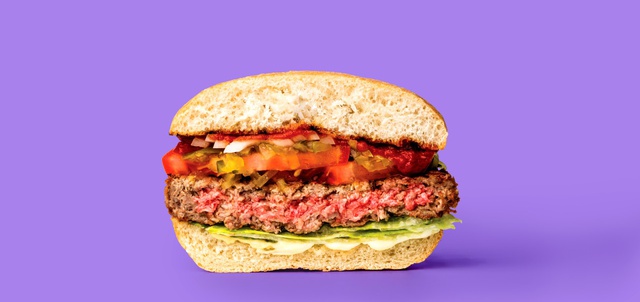
From the first days of the Impossible Burger, the company'splant-based heme ingredient— soy leghemoglobin —set it apartfrom all other competitors. Impossible Foods' heme gives its products a distinctly meaty taste, the company has said. It also makes the plant-based burgers "bleed" and appear pink in the middle when cooked.
Until last year, no other manufacturer making either plant-based meat products or ingredients had been able to make plant-based heme. Motif's Hemami, whichreceived generally recognized as safe statusby the FDA last year, becameavailable as a standalone ingredientfor manufacturers making plant-based meat in December.
As an ingredient company, Motif is concentrating only on making Hemami and other components to improve plant-based foods. It does not manufacture plant-based burgers, though it did make some for demonstration purposes at trade shows, and it partnered with the Coolgreens restaurant chain for consumer testing. The lawsuit says this is where the patent infringement lies: By selling its Hemami ingredient, Motif "has actively induced its business partners to make, use, sell, and/or offer for sale the Infringing Burger."
It's indisputable that Impossible Foods has been an inspiration for Motif FoodWorks. When Motif officially launched as a division of Ginkgo Bioworks in 2019,银杏Co-founder and CEO Jason Kelly told CNBCthat Impossible Foods' success drove his interest in creating an ingredients division.
An emailed statement from a Motif spokesperson refuted the claims made in the lawsuit.
"This complaint is not supported by facts or the law and is nothing more than a baseless attempt by Impossible Foods to stifle competition, limit consumer choice, and impede Motif, a new and innovative company with significant business momentum," the statement says. "We intend to contest these allegations vigorously and will respond through the appropriate legal channels. We will continue to pursue our go-to-market strategy and work towards our mission to bring better tasting, nutritious and sustainable foods to the world."
Hemamiisn't the only ingredient in Motif's portfolio. Last year, it launched texture enhancerAppetexand gainedexclusive access to technologiesthat enhance fats in plant-based meat and texture in plant-based cheese. Enthusiasm about the work that Motif is doing has drivenresearch partnershipsas well as funding. According toCrunchbase, the company has received超过3.44亿美元in investments, including a$226 million Series B roundlast year.
Motif is not the only other company to have developed a plant-based heme ingredient. Back of the Yards Algae Sciences, which works with spirulina microalgae, announced last year that it also hadcreated a heme ingredient. The ingredient, which has not yet been introduced at large scale, is extracted from spirulina algae. Motif's Hemami is made through fermentation using yeast — the same process used by Impossible Foods.
From any angle, Impossible Foods is a formidable opponent. Its plant-based heme has helped it become one of the top companies in plant-based meat. The company is private and does not report sales figures, but it has seen recent growth and attracted massive investments, including a$500 million round last Novemberthat brought its lifetime funding to more than $2 billion.