Dive Brief:
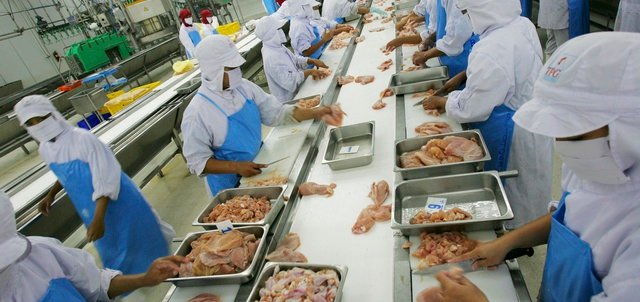
- The U.S. Department of Agriculture's Food Safety and Inspection Serviceannounced Nov. 23it posted the names of slaughterhouses that failed to meet salmonella performance standards for chicken parts. The agency had previously only posted results for whole chickens. The new data looked at slaughterhouses fromOct. 29, 2017 to Oct. 27, 2018.
- The Center for Science in the Public Interest, whichwants the USDAto declare all strains of salmonella in meat and poultry productsas adulterants,said in a statementthe data show "stark differences" between the four major poultry producers. Eight of Perdue Farms' 11 slaughterhouses on the list failed to meet salmonella standards for chicken parts, the group pointed out. Meanwhile 26% of Pilgrim's Pride's and 17% of Sanderson Farms' slaughterhouses failed the standard. None of 32 Tyson Foods' slaughterhouses on the list failed.
- The USDAannounced in the Nov. 9 Federal Registerthat it planned to change its salmonella and campylobacter testing programs and follow-up sampling procedures. FSIS said it will not be including follow-up sampling results when determining a slaughterhouse's category status because it better encouraged sustained improvements while still accurately reflecting current conditions.
Dive Insight:
This change could be meaningful for consumers who don't buy whole chickens as often as they do chicken parts. These results could push shoppers to change which brands they purchase since they can now check and see, for example, how some of Sanderson Farms' facilities are doing compared to Pilgrim's Pride.
At the same time, chicken producers that are doing well might take advantage of the newly published sampling data to brag about their testing results. Whether the information really provides an accurate portrayal of food safety practices is another question, but the consumer trend is toward more transparency rather than less, so consumers would likely want to know more about these results.
According to arecent report fromLabel Insight and the Food Marketing Institute, 75% of consumers would switch to a brand giving them more in-depth product information in addition to what’s provided on the physical label. Asked the same question two years ago, only 39% said they would do the same. It's not clear whether this trend influenced the federal agency to start releasing salmonella sampling results for chicken parts and provide names of the company slaughterhouses and their locations, but it could have played a part.
FSIS has been tracking salmonella sampling results for some time, but it doesn't look like the agency is finding conditions that are terrible, since the listed slaughterhouses are not currently at risk of being shut down.
TypicallyUSDA cites a facilityfor specific problems, issues letters of warning, detains products and occasionally suspends operations. Suspension of federal inspections, which equals a shutdown, has been threatened —it occurred in 2013 with Foster Farmsdue to salmonella contamination — but it's not that common since producers usually take steps to improve their food safety programs rather than face it.
According to Sarah Sorscher, CSPI's deputy director of regulatory affairs, the newly published salmonella sampling information has focused in on an important problem — more than one-quarter of slaughterhousesindustry-wideare failing the chicken parts standard.
"The new data should encourage these failing slaughterhouses to clean up their act," she saidin a statement.
Because consumers and advocacy groups concerned about food safety andfoodborneillness outbreaks have been agitating for more information about pathogen testing results, USDA may have started something it might have to continue or it could risk backlash.